
Suggested Standards of Care for Finnish Sleddog Farms
A work-in-progress proposal for a two-tier welfare system for Scandinavian sleddog farms, drawn from BC legislation, Mush with Pride and industry knowledge.
A work in progress, drawn from the BC legislation and Code of Best Practice, the minimum standards of Mush with Pride, and our knowledge of the Scandinavian industry. We suggest Finland adopts a two-tier system: 1) clearly defined minimum care standards enforceable by law, and 2) a voluntary code of best practice assessed alongside the annual inspection.
- Proposed two-tier system: enforceable minimum standards + voluntary best-practice code
- Public transparency modelled on Finland's restaurant 'oivahymy' smiley rating system
- Tethers must be at least 1.83m long with a 360-degree swivel; no choke collars
- Dog under 1 year should not live permanently on a chain
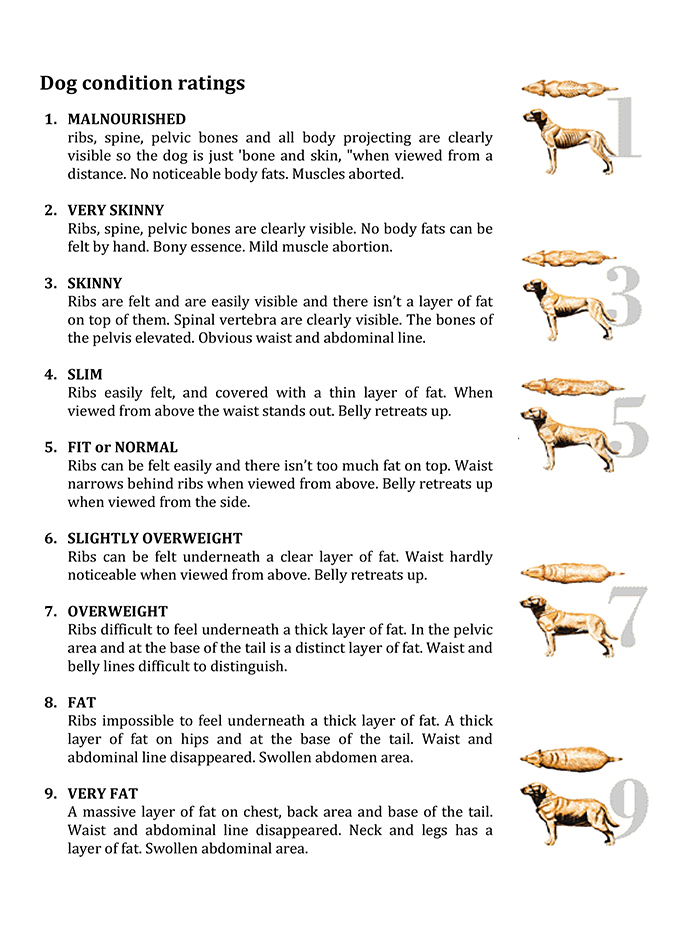
- Body condition monitored on the Nestle scale; vet sought if below 3 or 7+
- Cage sizes set by dog weight in Finland (e.g. 8m2 for one 20kg dog)
A transparent 'smiley face' rating system
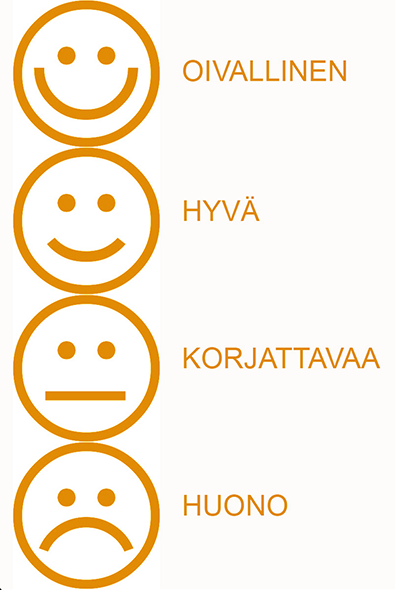
An audit has most impact when findings are public, so we suggest Finland's food-industry 'oivahymy' (smiley) model, under which restaurants must show at a glance how well they meet hygiene standards. The wider the smile, the better.
Since at least 50% of consumers choosing between farms do so from abroad, ratings should be displayed at the farm entrance, in a key public area on the farm, and on websites and social media. The best farms would show charts for both legal minimums and best practice, giving consumers a defence against 'animal-welfare-washing'.
Living conditions: containment areas
Each containment area (a cage, or the area a tethered dog can roam) must include a dog house, meet minimum space requirements so the dog can move freely and toilet away from eating and sleeping areas, be cleared of faecal matter at least once each day, be kept sanitary, and drain well over gravel, wood or wood shavings.
In Finland pen size follows dog weight. An 8m2 cage holds 1 x 20kg dog or 2 pups under 10kg each; a 9.3-10m2 cage holds 2 small males or 2 average females; a 13m2 cage holds 2 large males or 3 average females; a 15m2 cage holds 3 large males or 4 small males / average females.
Tether and dog house requirements
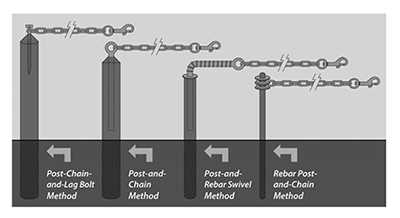
Tethers must be safe, of a size and weight that causes no discomfort, at least 1.83m long, and fitted with at least one swivel that turns 360 degrees at the collar end. Choke collars must never be used for tethering, and a dog under 1 year of age should not live permanently on a chain.
Dog houses must let dogs stand, turn around and lie down comfortably, and shelter them from rain, wind, snow, sun and extremes of heat and cold. Open teepee kennels are for summer only unless their entrances keep snow out.
Health, welfare and exercise
Each dog must be fed a balanced diet meeting its caloric and nutritional needs at least once every 24 hours, with clean, palatable drinking water available, and be socialised throughout its life with humans and other animals to maximise its chances of rehoming.
Sweden already requires every dog be released from its containment area at least once every 24 hours, into an exercise yard at minimum, with exceptions for illness, late pregnancy, very young pups, extreme weather, recent racing exertion or veterinary direction. Body condition is monitored regularly on the Nestle scale, with a vet sought if it falls below 3 or reaches 7 or more.
Good to know
- Minimum tether length
- 1.83 m
- System proposed
- Two-tier (minimum standards + voluntary best practice)
- Feeding minimum
- Balanced diet at least once every 24 hours
- Body condition scale
- Nestle scale (act below 3 or at 7+)
Ready when you are
Real wilderness, 200+ huskies, eighteen winters in.