
FAQs about Safaris
Answers on dog teams, distances, food and accommodation, fitness and experience needed, temperatures, safety, the polar night and seeing the northern lights.
Frequently asked questions about what to expect on a Hetta Huskies safari: how your dog team is chosen, how far the dogs run, the cabins and food, the fitness and experience required, how cold it gets, how we keep you safe, and your chances of seeing the northern lights.
- Solo-sleigh teams of 4 to 6 dogs, matched to your weight, strength and experience
- Dogs chosen via a computerised distance-tracking system
- Steady safari speed of c. 10km/h; rarely under 25km/h at departure
- All meals included; cabins range from farm kotas to high-tundra refuges
- No prior experience needed; moderate fitness and balance suffice
- Northern Lights visible on average 3 of 4 clear nights in the dark season
How many dogs will be in my team and how will you choose it?
Solo-sleigh teams generally have 4 to 6 dogs, depending on the safari, the conditions and your experience, weight and strength. We may move dogs around after the first training ride so each team progresses at a similar speed.
A computerised record of which dogs run each day automatically flags which should run or rest, based on distances over the previous 7 outings. From the 'green light' dogs we first pick a primary leading pair, then the additional lead dogs and the swing, team and wheel dogs that suit each front combination. We know which dogs run well together and which clash, and we account for injuries, pregnancies and heat. Multi-day lead dogs must be especially strong on GEE and HAW.
02Do the dogs run in the same positions?
In a six-dog team the dogs are harnessed in three pairs. The two nearest the sled are the wheel-dogs (normally larger, often males), providing the power. The middle pair are the speed-dogs, the constant work horses providing stamina and regulating the team's speed. The front two are the leaders, usually smaller and often female, providing the intelligence.
Many team dogs can also run in wheel, and most leaders can also run in team. Don't get too attached to any particular dog immediately, as teams may be reshuffled in the first two days. By your third day of harnessing, feeding and bedding down your own team, the bond will be strong.
03What daily distance can the dogs run?
The dogs are trained to run long distances, and 50km is relatively short for them by the end of the season.
- Capability: a good team can easily cover 80 to 90 km in a day
- Our limit: we generally ask ours to run no more than about 40km a day to keep them continually keen
- Safari pace: we hold a steady speed of about 10km per hour for safety, though it is rare to leave the farm at under 25km per hour, so be ready for a rush of adrenaline from the moment of departure
04Accommodation & food
The cabins we use are a mixture of traditional Lappish kotas like our own farm kota (circular wooden buildings with reindeer-skin-covered sleeping platforms around a central fireplace) and typical Finnish holiday cabins. A few of the more adventurous high-tundra cabins are like Alpine refuges, where you lay out your sleeping kit on benches. Most people are pleasantly surprised by the quality.
All meals are included. Breakfast is bread, porridge or muesli with dehydrated milk, coffee, tea, hot chocolate and jam. Lunch is bread, sandwiches and soups. Dinner is co-ordinated by the guide. Special dietary requirements can be accommodated with advance notice.
05Do I need experience and how fit must I be?
No prior experience of dog sledding, skiing or Arctic living is required. Before every safari the guides give a driving demonstration and safety briefing, the key rule being that you must never let go of your team if you think you are about to fall off.
Most moderately active people do not find a husky safari too physically challenging. A reasonable level of fitness, concentration and balance are the key attributes. You will feel tired after the first full day and your shoulders may be sore, but two or three days in you will feel like a professional. Frame of mind matters as much as fitness, and with an open, curious mind you will find mushing a wonderful activity, very close to nature.
06How cold is it, and will I see the Northern Lights?
In December, January and February daytime temperatures run between -5C and -30C, with nights often falling to -40C. In March we expect -5C to -15C, and by April spring is in the air at 0 to -5C. In January there is enough light for outdoor activities from about 9am until 3pm, and by March sunrise is at 7am.
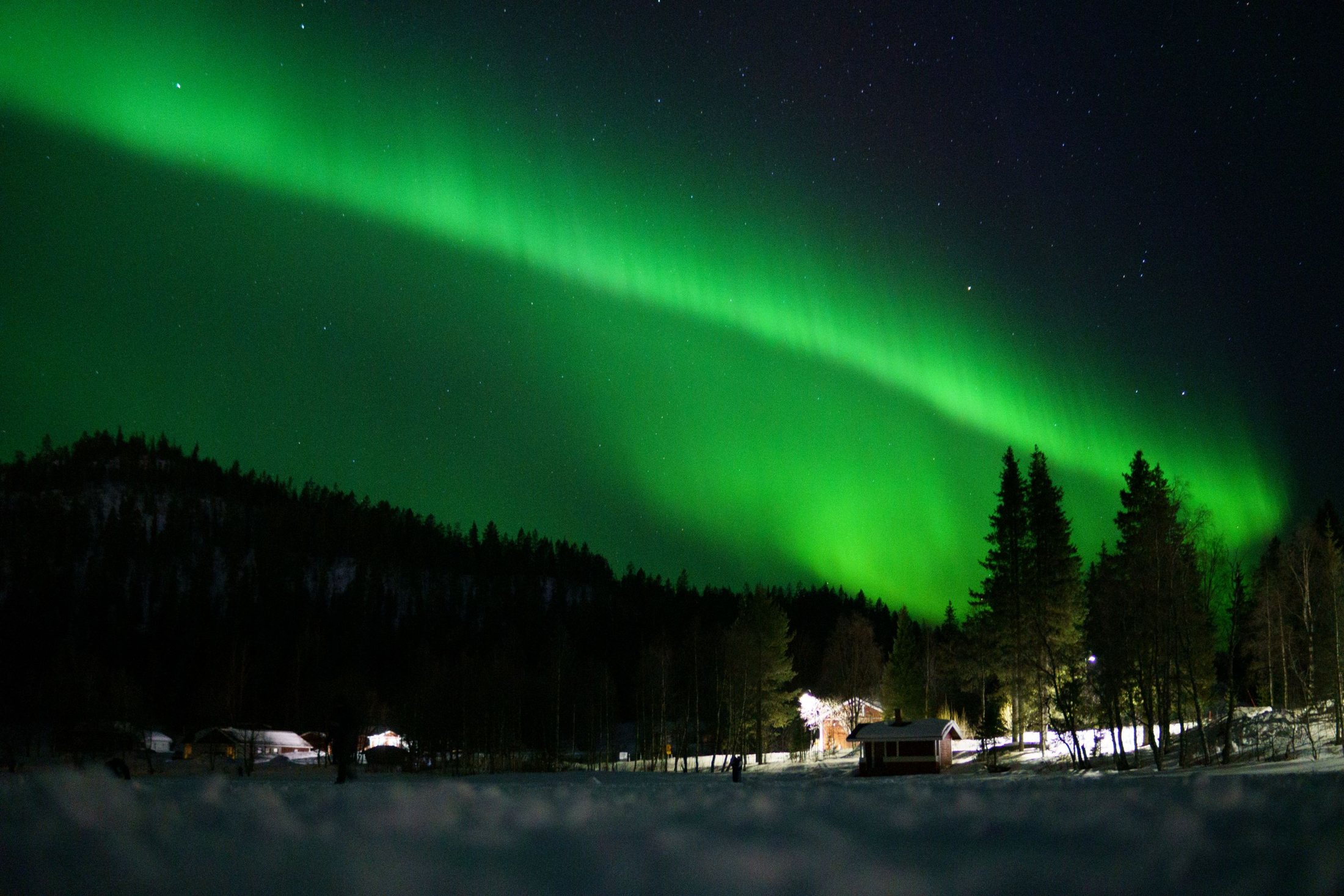
This region has the highest rate of occurrence of the Northern Lights (Aurora Borealis) in Finland, visible on average three out of four nights during the dark season in clear weather. Stay a week, far from habitation, and you have a good chance of seeing the lights.
Good to know
- Temperatures
- Dec-Feb -5 to -30C (nights -40C); Apr 0 to -5C
Ready when you are
Real wilderness, 200+ huskies, eighteen winters in.