
Farm and Safari Equipment
How we source sustainably and make much of our own equipment, from sleds and lines to kennels, harnesses and collars, in one of the most remote regions of Europe.
There are only three shops within 100km of us, so sustainable, short supply chains that keep money local take work. We order and collect specialist goods together with other farms, cutting transport costs and emissions, take wood we cannot grow ourselves from local sawmills, buy reused or recycled products wherever possible (like the paper-mill waste covering our kotas), and recycle our own paper and plastics.
- Only three shops within 100km, so goods arrive via short supply chains and cooperative orders
- Bjorkis toboggan sleighs from Kiruna, Sweden, with drag, claw and anchor brakes
- About 200 necklines made in-house each year, main lines from Muonionautotarvike in Muonio
- Harnesses colour-coded by size (up to red size 4), collars red for females and castrated males
- Weekly checks of sleighs, lines, harnesses, cages and running circles
Choice of Sleds
Most client sleighs are toboggan sleighs, low-slung with a closed bed that floats over deep snow, built by Bjorkis in Kiruna, Sweden. We also run one from Oinakka in Kiruna and a couple of bigger basket sleds by Juha Pekka from Ivalo, whose raised beds suit larger passengers and families. Heavier guide-driven family freight sleighs come out mainly for our Father Christmas season.
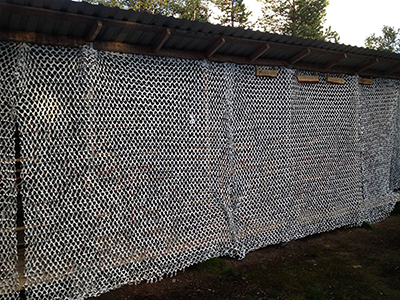
Every sled has built-in drag and claw brakes and runners for the musher, guide and multiday sleighs carry anchor brakes too, and after each safari the sleighs go into a custom-built shelter rather than the snow.
Choice of Lines
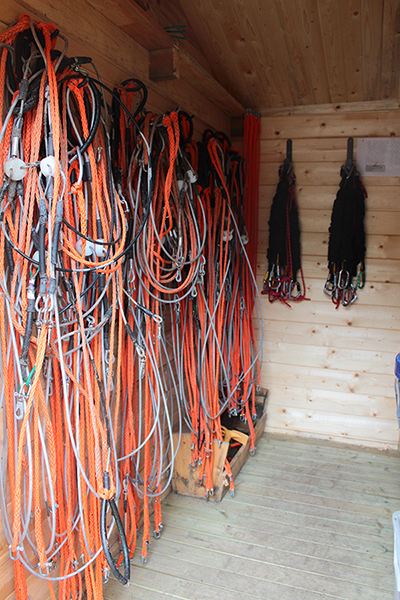
We make many lines and do all in-season repairs ourselves, buying ready-made main lines from Muonionautotarvike in Muonio, where demand from c. 15 companies within a 100km radius has let suppliers standardize common designs. We still size and splice our own backlines, make about 200 necklines a year, and splice leads and training skijoring lines.
Choice of Kennels
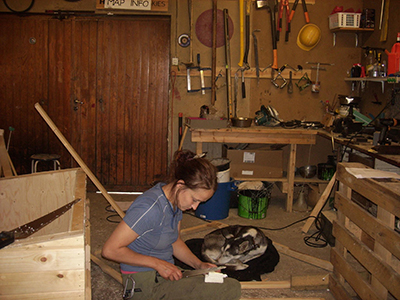
We build most kennels ourselves from local materials, to our own double-entrance design so no dog can deny another shelter in bad weather, and we took part in a research project on optimal dog-sled kennel design.
Choice of Harnesses and Collars
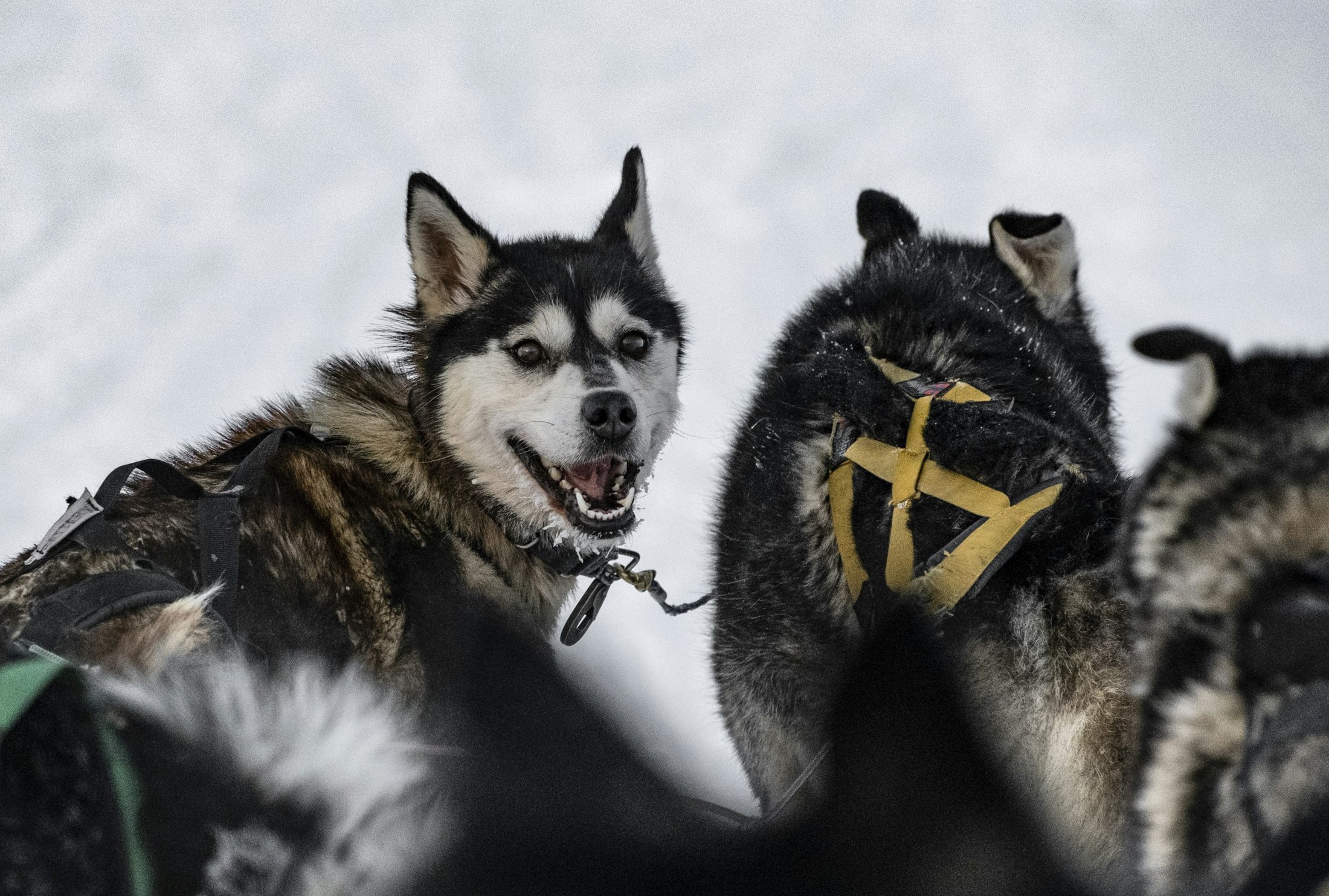
We mainly use Bjorkis harnesses, ideal for fluffier Siberian-style dogs, colour-coded by size. Pups start in black with reflectors, graduate to pink training harnesses, then the smallest black adult size. Many females work in yellow, some in blue, our largest dogs in red size 4, and a few greyhound-like Alaskans in Manmat or Non-Stop harnesses.
Females and castrated males wear red collars, males green, blue or black, one more clue for new guides that they have the right dog, and one more safeguard against unwanted pregnancies.
Maintaining Our Equipment
We check sleighs, lines, harnesses, cages and running circles weekly, fixing problems as soon as they appear. In summer we net the sleigh shelter against berry-fed birds, and every year brings new projects to improve life for dogs and guides.
Good to know
- Harness sizing
- Colour-coded by size, black/pink/yellow/blue/red
Ready when you are
Real wilderness, 200+ huskies, eighteen winters in.