
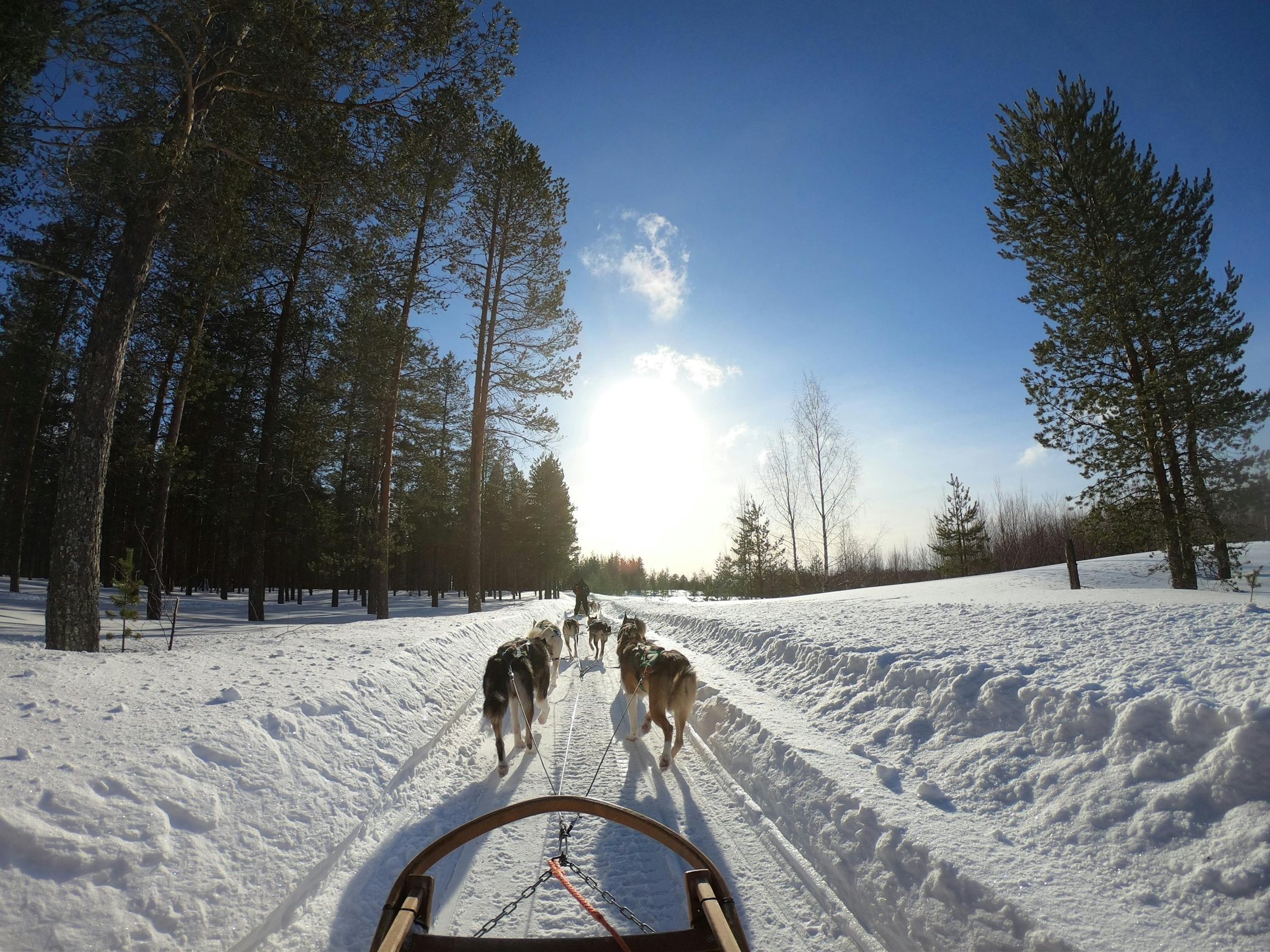
The History of Sled Dogs
How dog sledding developed across Greenland, Siberia and Alaska - and how the Siberian and Alaskan Husky breeds came to be.
Dog power has served hunting and travel for hundreds or even thousands of years. The world's oldest sleigh runner, from 9,000 years ago, was found in Finland, and runners dating back c.5,000 years are believed to have been pulled by dogs (reindeer were probably not yet tamed). Dog sledding as we know it emerged in at least three Arctic regions with a plentiful supply of meat for much of the year.
- Three founding regions: Greenland, Siberia (Chukchi) and Alaska
- World's oldest known sleigh runner (~9,000 years) was found in Finland
- Siberian Huskies arrived in America in 1908, mocked as 'Siberian Rats'
- 'Alaskan Husky' is defined by performance, not appearance - not a kennel-club breed
- About 60% of huskies have brown eyes, 20% blue, 20% one of each
- Top racing Alaskan winning speeds average 19+ mph over three days
Greenland dogs
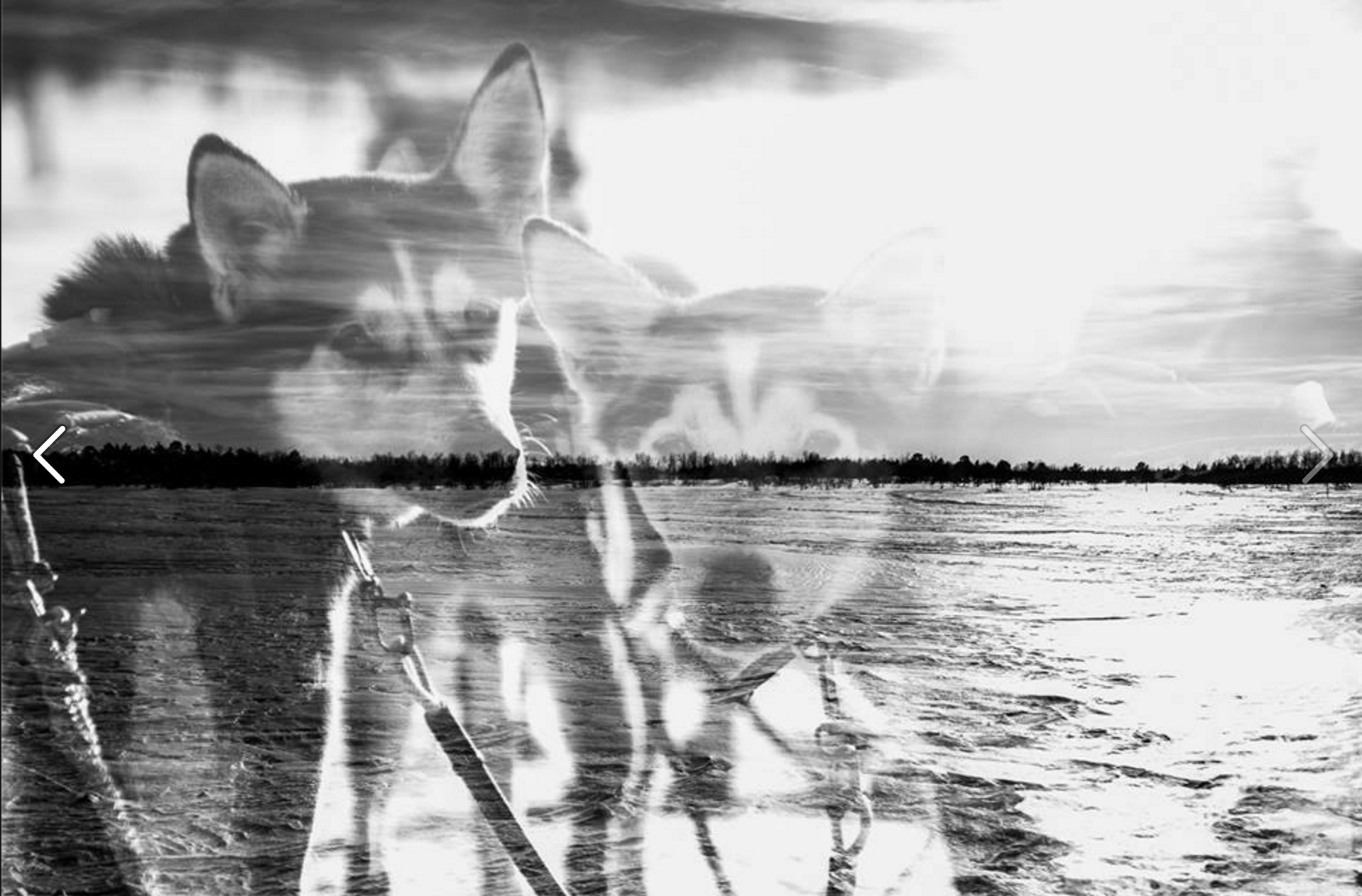
On Greenland the Greenland dog became its own breed. Inuit valued strong, durable, well-coated dogs that could cross sea ice and hunt polar bear, traditionally roped as a 'fan' team of 10-14 without a clear leader. Tough in body and mind, they withstand hunger and cold well but can be a little hard to train. Often left to fend for themselves on isolated islands over summer, the breed was shaped by survival of the fittest, so dog-to-dog aggression is more common than in human-selected lines.
The Siberian Husky
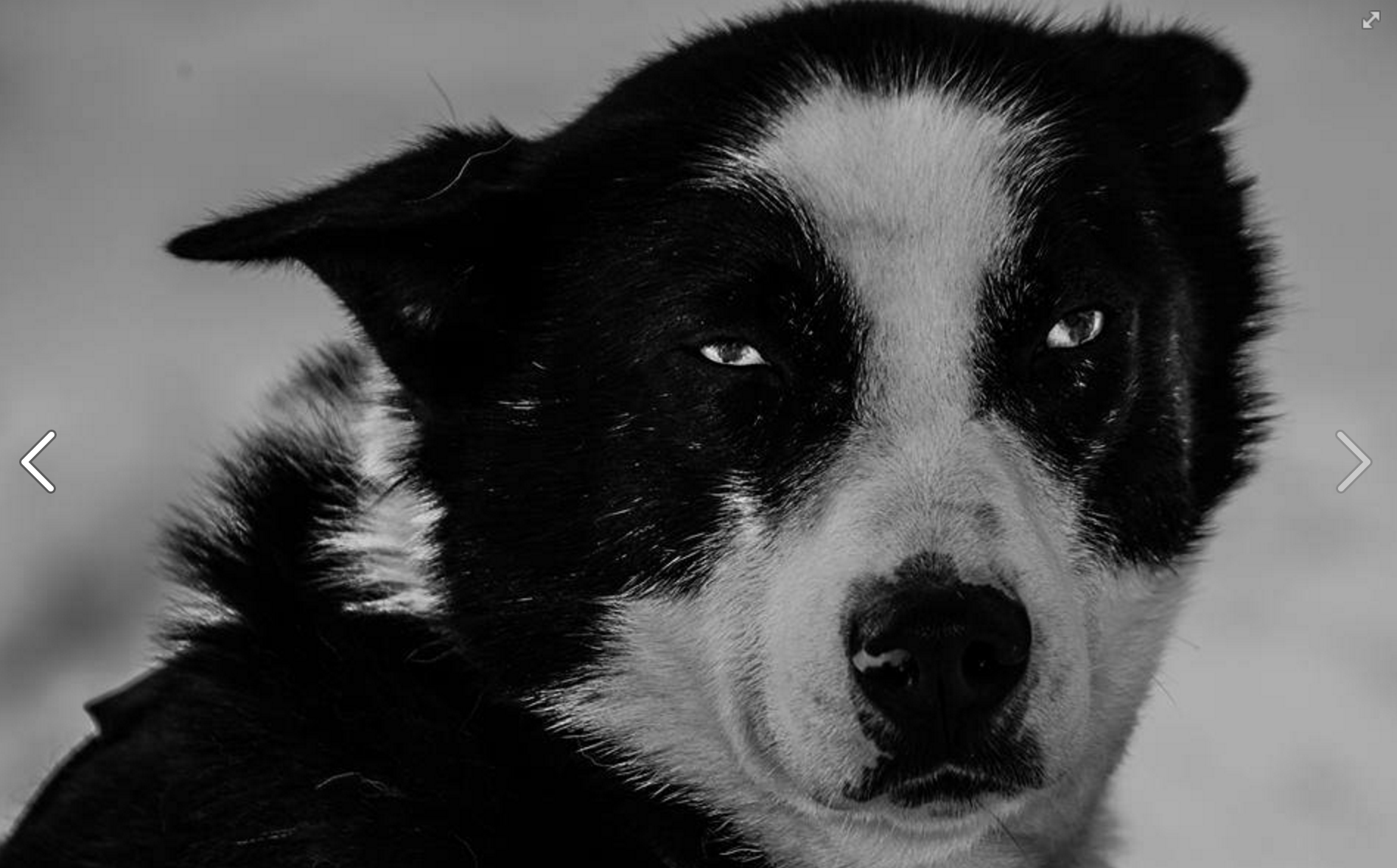
The Siberian Husky comes from the Chukchi people of north-eastern Siberia and is one of the world's oldest breeds. The Chukchi treated their dogs well, sharing food and tents even in famine, which is why today's Siberians are supremely friendly towards people. They are slightly built, very social, with good endurance and few guard or hunting instincts. The breed arrived in America in 1908 to ridicule, mocked as 'Siberian Rats', then proved itself in the 1909 and 1910 All-Alaska Sweepstakes and became a racing mainstay.
The Alaskan Husky
Alaska is the third pivotal region. The Alaskan Husky descends from native village dogs, the Coastal Eskimo Dog and the Alaskan Interior Village Dog, whose ancestors crossed the Bering Land Bridge over 14,000 years ago.
- Gold rush: the Klondike made the region a melting pot of breeds as demand for hauling dogs exploded
- Changing use: pure-bred Malamutes gave way to dogs crossbred for mail, racing or freighting
- Definition: 'Alaskan Husky' simply denotes a mixed-breed dog defined by its job, with enough pull, endurance, speed and coat for Arctic conditions
- Status: it is not a recognised breed
The start of racing
Racing's popularity dates to the gold-rush era. The Nome Kennel Club, founded in 1908, ran the 408-mile All-Alaska Sweepstakes from Nome to Candle and back, and prize money drove the breeding of ever-faster dogs. Leonhard Seppälä, a friend of Amundsen, did much to replace the Interior Village dog with imported Siberian Huskies, and the famous Togo and Balto came from his line. The resurgence of recreational mushing since the 1970s stems directly from the Iditarod Trail Sled Dog Race.
World wars and the modern Alaskan
Sled dogs served with distinction in both world wars before evolving into today's racing Alaskan.
- WW1: the French shipped dogs from Nome to haul supplies, and three received the Croix de Guerre
- WW2: the US Army used sled dog teams, a mix of Alaskan Malamutes, Mackenzie River Huskies and Alsatians, for transport and search and rescue, some dogs even earning parachutists' wings
- New blood: hounds, pointers, Irish Setters, Greyhounds and Salukis were later crossed in for speed and endurance, creating types such as the formidable sprint-racing Eurohound (an Alaskan Husky crossed with a German Shorthaired Pointer)
- Today's Alaskan: averages 46-50 lb for males and 38-42 lb for females
- Value: a top racing lead dog can be worth $10,000-$15,000
Ready when you are
Real wilderness, 200+ huskies, eighteen winters in.