
Kennels, Cages and Chains
Why our dogs live outside through the arctic winter and how we use a dual system of double-kennel cages and individual running-circle chains to give them the best of both worlds.
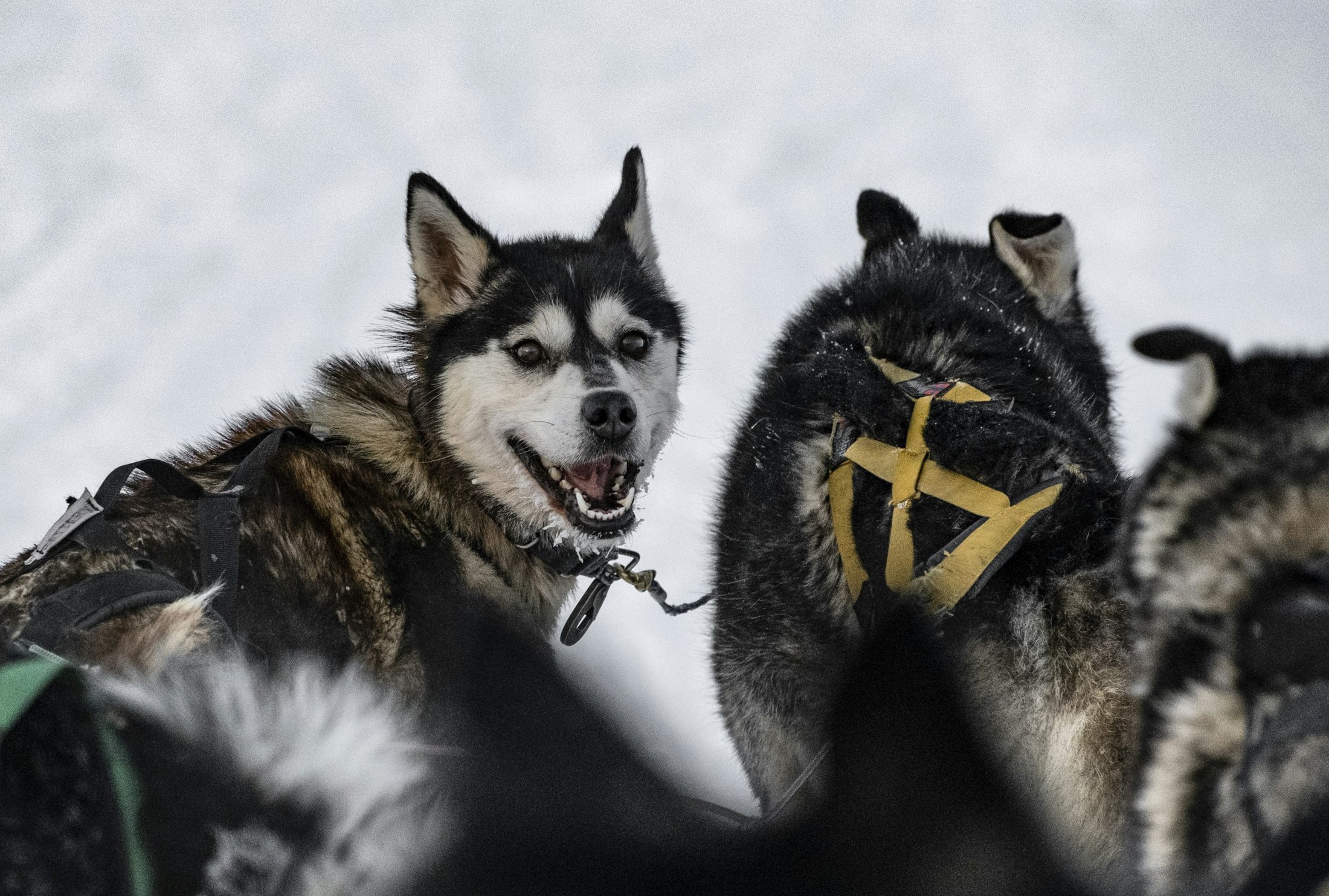
Do the dogs really live outside all winter? Yes. Traditional husky breeds withstand temperatures as cold as -40 degrees Celsius. Shorter-haired Alaskans and frostbite-prone dogs join a heightened watch list below -30C, and injured dogs come inside to recuperate before gradual reacclimatisation. At times we have up to 20 dogs in the house, and Pasi regularly threatens to move out.
- Traditional huskies withstand -40C, with a watch list below -30C
- Shorter-haired Alaskans are the first onto the frostbite watch list
- Shared cages plus individual running-circle chains, the best of both worlds
- Females and pups under one year live mainly in cages
- Double kennels with two entrances, so no dog blocks another's shelter
- Puppy Hilton and kindergarten for raising and weaning pups
- Bedding changed at least weekly in winter
Double Kennels and Cages or Individual Kennels and Running Circle Chains?
In Alaska most sled dogs live on individual running chains, in Scandinavia in shared cages. Having visited many farms before building our own, we saw advantages in both, so we use a mixture. A few dogs stay in one system, too grumpy for company or too old for chains, but most rotate through both each year.
Cages: Pros and Cons
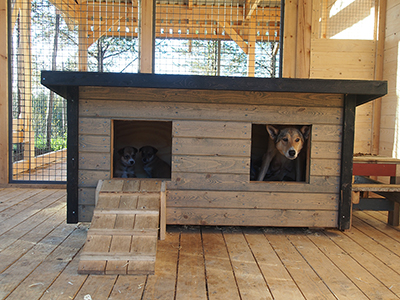
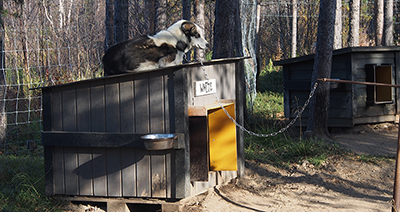
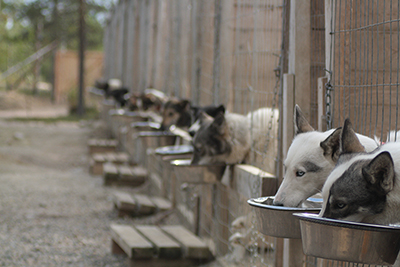
Caged dogs live side by side, play by day and curl up together at night, gaining socialisation and burning less energy to keep warm, which matters most to shorter-haired racing Alaskans. Accidental mating is harder too, so most females and all pups under one year live mainly in cages. The drawback is more fighting injuries, especially at feeding time. Caged dogs use double kennels, split into two offset spaces with two entrances, so neither dog can deny the other shelter.
Running Circles & Chains: Pros & Cons
On the chains, each dog has its own kennel and a large running circle, even more freedom of movement than the cages. Some circles are isolated for the grumpiest dogs, others overlap for contact. Chain dogs learn to untangle themselves, cutting injury risk if a young dog tangles in the lines while running, especially in the darkest months and on Northern Lights safaris. Pups start on short daytime chains, sleeping in the cages, before graduating full-time.
Puppy Hilton & Puppy Kindergarten
At a couple of months old, pups move into the 'puppy Hilton', a two-level kennel whose staircase is deliberately hard at first, so mum can escape upstairs to food and drink. Within a month most pups can climb it, but by then they are largely weaned and spend days in the kindergarten next door, mum still close by. At around 6 months they join cages with older dogs who oversee their social development.
Choice of Kennels and Bedding
We build most kennels from local materials and buy some singles from ThemeFix in Kiruna, a work-rehabilitation cooperative. Sick-dog kennels have wider entrances for post-surgical cone collars. All kennels are raised for insulation, with roofs the dogs sunbathe on. Yes, they have bedding, straw, wood chips and pine fibres changed at least weekly in winter. And yes, they run free, just not all at once, mostly in the mornings.
Ready when you are
Real wilderness, 200+ huskies, eighteen winters in.